Ghost Tongues: Where Britain's Lost Languages Still Whisper
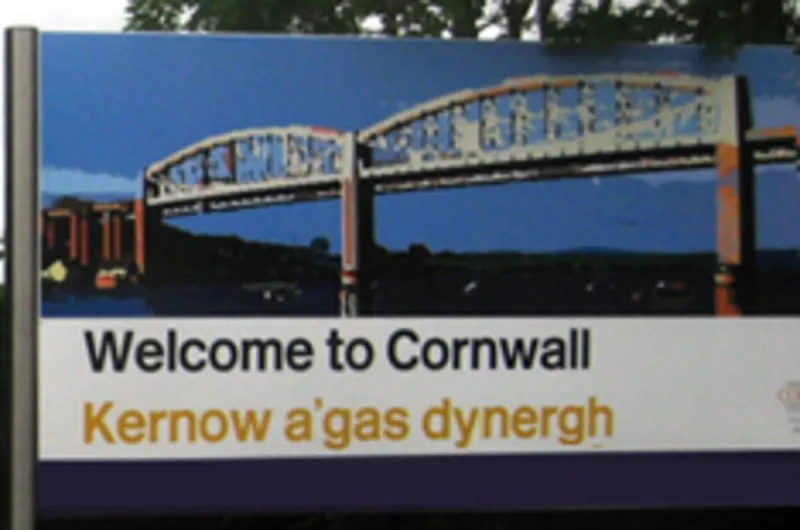
Photo: Cornish coastal village Cornwall bilingual road sign, via images.cdn.autocar.co.uk
Languages don't always die quietly. Some go out with a whimper — a last speaker, a last word, a last whispered lullaby. But here's the thing about language death in Britain: the bodies are still warm. Walk through the right places with the right ears, and you'll hear tongues that officially expired centuries ago, still muttering away in place names, pub signs, and — in a few remarkable corners — in living conversation.
This is a field guide to Britain's ghost languages. Bring a notebook.
Cornwall: The Language That Refused to Lie Down
Cornish is the great comeback story of British linguistics. The last monolingual Cornish speaker is often said to have been Dolly Pentreath, a Mousehole fishwife who died in 1777. By the Victorian era, Cornish was a museum piece. Then, in 1904, Henry Jenner published A Handbook of the Cornish Language, and something remarkable happened: people started learning it. On purpose. For fun.
Today, you can hear Cornish at the annual Lowender Peran festival in Perranporth, hear Cornish-language radio online, and see bilingual road signs all over the county. Around 500 people speak it fluently, with thousands more dabbling. Pop into a bookshop in Penzance and you'll find Cornish primates — sorry, primers — sitting proudly beside the Poldarks.
The lesson? A language is only dead if nobody bothers to resurrect it.
The Isle of Man: Manx and the Miracle of the Recordings
The last native Manx speaker, Ned Maddrell, died in 1974 — but he left a gift. Linguists had recorded him and other speakers, so when the revival began, learners had real voices to learn from, not just musty grammars.
Visit the Isle of Man today and you'll find Manx-medium schooling (Bunscoill Ghaelgagh in St Johns, where kids learn entirely through the language), Manx street signs, and a cultural confidence that would baffle the census-takers of 1900. There are now more fluent speakers than at any point in over a century.
Bath: Latin, Scribbled in Anger and Love
Not all ghost languages want to come back. Some just want to be read. The Roman Baths in Bath hold one of the loveliest archives of everyday ancient speech in Britain: curse tablets, scratched into lead and thrown into the sacred spring. Real Romans, complaining about real thieves: 'I curse the person who stole my gloves.' Ordinary grievances in an extraordinary voice.
It's a reminder that Latin wasn't just Cicero orating — it was blokes moaning about lost laundry. Every language has a register you don't find in textbooks.
Orkney and Shetland: The Norse That Never Fully Left
Viking rule ended in the Northern Isles in 1468, but Norn — the Old Norse descendant spoken there — lingered for centuries after. It finally faded in the 1800s, yet it never really left. It's in the map: Kirkwall, Tingwall, Grutness, Uyeasound. Say them aloud and you're speaking fragments of medieval Norwegian whether you like it or not.
Local historians in Orkney still collect Norn words from old recordings and documents — a language surviving as a kind of sediment, layered into the landscape.
How to Go Ghost Hunting
A few practical tips for the curious:
- Cornwall: Time a visit around a Cornish-language event or visit Kowethas an Yeth Kernewek in Penryn.
- Isle of Man: The Manx Museum in Douglas has superb language exhibits; ferry over for the annual Yn Chruinnaght festival.
- Bath: Book the Roman Baths' curse tablet talks — genuinely riveting.
- Orkney: Just drive. Every road sign is a linguistics lesson.
Every language tells a story — and apparently, not even death can shut them up. Listen closely, and Britain's ghost tongues will happily talk your ear off.