The First Song Ever Sung: How Lullabies Carry a Thousand Years of Culture in Four Notes
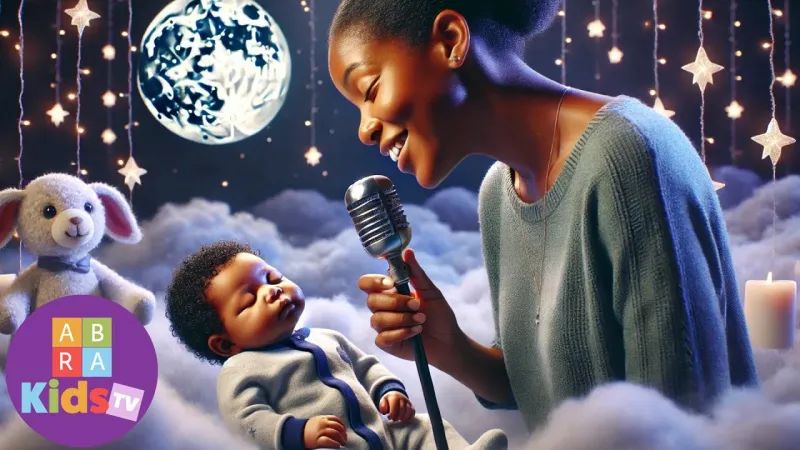
Photo: parent singing lullaby to sleeping baby warm lamp light, via i.ytimg.com
There's a moment familiar to parents everywhere: the house finally quiet, a small person heavy on your chest, and out of your mouth comes a song you didn't know you knew. Not a pop song. Not a nursery rhyme from a playlist. Something older, slower, half-remembered — a tune that seems to have arrived from somewhere else entirely.
Because it probably did.
The world's oldest broadcast
Ethnomusicologists have a theory that should stop you mid-scroll: the lullaby might be humanity's first musical genre. Before anyone carved a story into stone or scratched one onto papyrus, they were humming frightened, tired children into sleep. And here's the strange part — those songs sound remarkably alike wherever you go.
Play a Welsh cradle song next to a Somali hooyo lullaby, then a Punjabi lori, then a Gaelic òran-àlainn from the Hebrides, and something uncanny happens. The same descending phrases. The same gentle repetition. The same rocking triple time that mimics — researchers think — the heartbeat and sway a baby knew before birth.
A melody type, in other words, that has crossed oceans, empires and millennia without a single passport check.
What a lullaby actually carries
We tend to think of culture as something written down: the novels, the histories, the exam syllabus. But a lullaby is a denser artefact than most textbooks. Folded inside three minutes of humming you'll find:
- A language, often preserved long after it's otherwise lost. Welsh lullabies like Suo Gân kept the language ringing in ears through centuries when singing it in school could earn you a clip round the ear.
- A worldview. Somali lullabies frequently weave in camels, rain and kinship — a pastoral cosmology sung to children in tower blocks in Bristol.
- An emotional grammar. Many traditions mix sorrow into the soothing. The Punjabi lori often laments how the daughter will leave home — grief and love in the same breath. Scots Gaelic songs do the same, mourning absent sailors while promising return.
No one teaches a baby any of this. They just absorb it, four notes at a time.
The parents singing in borrowed tongues
We spoke to parents across the UK who sing lullabies in languages they barely speak — and their stories tell you everything about how culture actually moves.
Aisha, from Leeds, sings her daughter a Somali lullaby her own mother sang her. "I don't speak Somali properly," she laughs. "I can order food, argue with my mum, and sing about four songs. But at bedtime, my accent is perfect. It comes back like it never left."
In Cardiff, Rhys sings Suo Gân to his newborn even though his Welsh is GCSE-level at best. "My nan sang it to me. I don't know what half the words mean. Doesn't matter. The tune knows what it's doing."
And in Glasgow, Priya sings the lori her grandmother sang in Punjab — a song about a mother's love lasting "until the rivers run dry". "My daughter won't learn Punjabi from me," she admits. "But she'll know that melody until she's old. That's something."
That's more than something. That's transmission — the quiet, unbroken relay that has carried human culture further than any library.
The song that won't die
Languages fade. Borders shift. Empires collapse. And yet somewhere tonight, in a flat in Salford or a farmhouse in Ceredigion, someone is humming a tune their great-great-great-grandmother hummed on a different continent, in a different century, in a different tongue.
The lullaby doesn't need to be understood to be inherited. It slips past the defences of the conscious mind and writes itself directly into the body. Which is why, when the world gets loud, the first thing we do is sing the quietest song we know — and it turns out we all know the same one.