Juggernauts, Shampoos and Rogues: Words That Went Walkabout
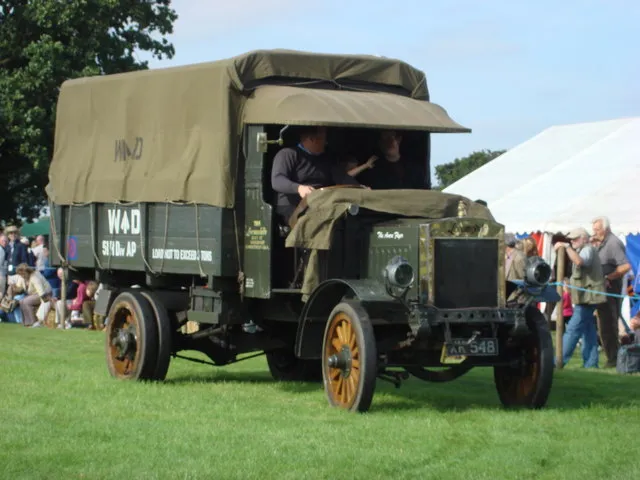
Photo: Oxyman, CC BY-SA 2.0, via Wikimedia Commons
English is less a language than a magpie's nest. We've pinched vocabulary from just about everyone we've ever met — and, in fairness, plenty of people have pinched ours. What follows is a pocket history of ten words that wandered into (or out of) Britain, each one a receipt from a cultural encounter we probably should have kept.
1. Shampoo
We didn't just borrow this one; we misheard it. Chāmpo is Hindi for "to massage or knead" — nothing to do with hair products at all. Sake Dean Mahomed, an Bengali entrepreneur who opened vapour baths in Brighton in the 1810s, is credited with introducing the practice to fashionable Regency England. Somewhere between the massage table and the bathroom shelf, the meaning slid entirely. Today the word is so global that its Indian origins surprise nearly everyone, including most Indians.
2. Juggernaut
From Hindi Jagannāth, a form of the god Krishna whose temple chariot at Puri was — by European accounts, likely exaggerated — enormous enough that devotees supposedly threw themselves beneath its wheels. Victorian writers turned that into a metaphor for any unstoppable crushing force. Now it means a lorry, a corporation, or the England football team's midfield. A Hindu festival became a British traffic hazard in roughly four hundred years.
3. Rogue
Here's a reversal: this one left Britain. From Latin rogare, "to ask" — probably via the slang of sixteenth-century beggars and vagabonds, the "rogues" who asked for a living. The word then sailed off and settled everywhere. In India, rogue describes a wild elephant separated from its herd. In Australian English, it's almost affectionate. America gave us Rogue One and rogue states. We exported a vagrant and the world made him a star.
4. Bungalow
Bengali bangla, "of Bengal" — the style of one-storey house that colonial administrators found cooler than anything they'd brought with them. The bungalow came home with the sahibs, spread across British suburbia, and is now the beloved default of the retired and the bungalow-proud from Bournemouth to Perth.
5. Loot
Hindi lut, via Sanskrit — plunder, spoils. It entered English through the mouths of soldiers in India and kept its larceny intact, though nowadays we mostly loot the sales and loot our kids' Halloween stash. A word with a genuinely criminal past, now perfectly respectable at a Boxing Day clearance.
6. Barbecue
Perhaps. Barbacoa came to Spanish from Taíno in the Caribbean, hitched a ride across the Atlantic, and drifted into English through colonial contact. The spelling wobbled for centuries — "barbacue", "borbecue" — before settling. Brits then did what Brits do: adopted the word and promptly ignored the weather forecast required to honour it.
7. Chit
Anglo-Indian shorthand, from Hindi chitthi, a note or letter. "I'll chit you for it" was regimental accounting language, and it stuck around in British offices and golf clubs long after the Raj. Your restaurant bill was once, technically, a piece of colonial correspondence.
8. Jungle
Hindi jangal, meaning wasteland or wild country — not necessarily forest at all. The British narrowed it to dense tropical vegetation, then Kipling romanticised it, and by the twentieth century the word had a soundtrack. More recently it named a migrant camp in Calais, a reminder that words carry whatever history we load onto them.
9. Robot
Stolen fair and square from Czech — Karel Čapek's 1920 play R.U.R. coined robota, forced labour, and English grabbed it within the decade. Proof that our borrowing didn't stop with empire; we'll take a good word from anyone, anywhere, anytime.
10. Barfly, Boycott and the Rest
Okay, that's cheating, but Captain Charles Boycott earned his eponymous verb in County Mayo in 1880 when tenants refused to deal with him, and the press made him immortal. The word now appears in more languages than almost any other English export — the ultimate souvenir of an Irish land dispute.
So What Does It All Mean?
Look at the list and you can read the shipping routes: India, the Caribbean, central Europe, Ireland. English is a ledger of every place Britain traded with, ruled, or argued with — and, increasingly, of everyone who's moved here and left their vocabulary behind like loose change in the sofa.
The borrowing goes both ways now, faster than ever. Japanese has taken skinship from us (sort of). Nigerian English is feeding words like suya and gist into global use. The magpie nest keeps growing, and honestly, that's the healthiest thing about the language. Every loanword is evidence that somebody, somewhere, met somebody else and talked long enough to exchange something worth keeping.