One Word Each: The School Assembly That Became a Language Festival
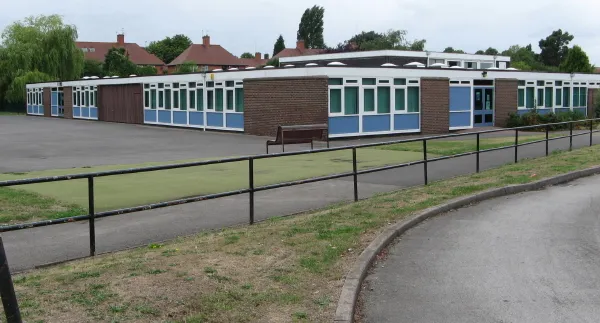
Photo: Sally Holmes, CC BY-SA 2.0, via Wikimedia Commons
Every language tells a story — and sometimes that story is only two minutes long.
That's roughly how long it took each child at a primary school in Rochdale to stand up, say a word, explain where it comes from, and sit back down. One word each. That was the whole experiment. By the end of the week, the school had collectively learned over three hundred words from more than forty languages — and, perhaps more importantly, learned something about the children behind them.
The Rules Were Almost Embarrassingly Simple
The brief, scribbled on a Friday afternoon staff meeting whiteboard, went like this: every pupil brings one word from home. Not a sentence. Not a phrasebook. One word. It could come from any language spoken in their household — Polish, Punjabi, Urdu, Welsh, Romanian, or the dialect of a grandparent in Glasgow or Newcastle. It could be a word for food, a feeling, an insult, a pet's name, or something nobody could quite translate.
The only rule: the child had to be the expert. Nobody else in the class was allowed to already know it. In practice, that rule collapsed immediately and beautifully — half the point turned out to be discovering that three other kids on your street also call your nan 'Nain' or 'Babcia' or 'Gran' and that all three words are somehow cousins.
What Two Minutes Can Do
Ask any teacher what happens during show-and-tell and they'll tell you the same thing: the quiet ones stay quiet. But give a child sole ownership of a word — a word nobody else can claim, a word that belongs to their kitchen table — and the dynamic shifts.
One boy taught the class the Punjabi word 'phuphar' (a very specific kind of aunt) and had to field questions for ten minutes about why English needs a whole sentence to explain what he could do in one. A girl from a Welsh-speaking family in the valleys — via a family connection to Patagonia, of all places — introduced 'hiraeth', a longing for a home that may never have existed. A lad from Castlemilk taught everyone 'scunnered', and within a week the entire Year 4 had declared themselves scunnered by homework.
The words mattered less than the moment of expertise. For two minutes, a child who usually sat at the back was the most knowledgeable person in the room.
The Map on the Corridor Wall
The school's deputy head, a woman who has taught in the area for two decades, said the most striking result wasn't linguistic at all. It was the wall.
Each word went up on a paper brick, and the bricks formed a map of the school's languages — a corridor display that grew so large it wrapped around two corners. Parents started coming in to photograph it. Grandparents sent in words from villages that no longer exist. One family contributed a Romani word that had passed through four generations without anyone writing it down.
That's the thing about one-word experiments: they scale down the intimidating idea of 'multilingualism' into something a six-year-old can hold. Nobody had to become fluent. Nobody had to perform their heritage. They just had to hand over a single piece of it.
Why It Works (And When It Doesn't)
For teachers considering a version of this, the Rochdale staff offered a few honest notes from the field:
- Let the awkward words in. Not every child's home language is a tidy national one. Glaswegian slang, Scouse, Shetlandic, family in-jokes and code-switched hybrids all count. Insisting on 'proper' languages quietly tells some kids their homes don't qualify.
- Don't grade it. The moment it becomes assessment, it becomes performance. The magic lives in the informality.
- Expect the adults to get involved. Several parents asked if they could do a version at the school gate. (They could. They did. Someone's dad now runs a Friday 'word of the week' on the playground.)
- Watch for the child who says they don't have a language. English counts. So does the way their family says 'ta-ra' or 'now in a bit'. Everyone speaks a version of something.
The Bigger Picture
Britain has always been a country of borrowed words and braided accents — we've written before about the migrant kitchens that rewrote the way the nation talks, and the dead words English left behind on its way to the present. What the Rochdale experiment shows is that this story isn't just historical or academic. It's happening at a hundred kitchen tables tonight, one word at a time.
A single word can't teach anyone fluency. But it can teach something rarer: that the child next to you carries a whole world in their pocket, and that you only need two minutes to peek inside.
Every language tells a story. Sometimes it only takes one word to start telling it.