Singing in One Voice: The Forgotten Language Lesson Happening on the Terraces Every Saturday
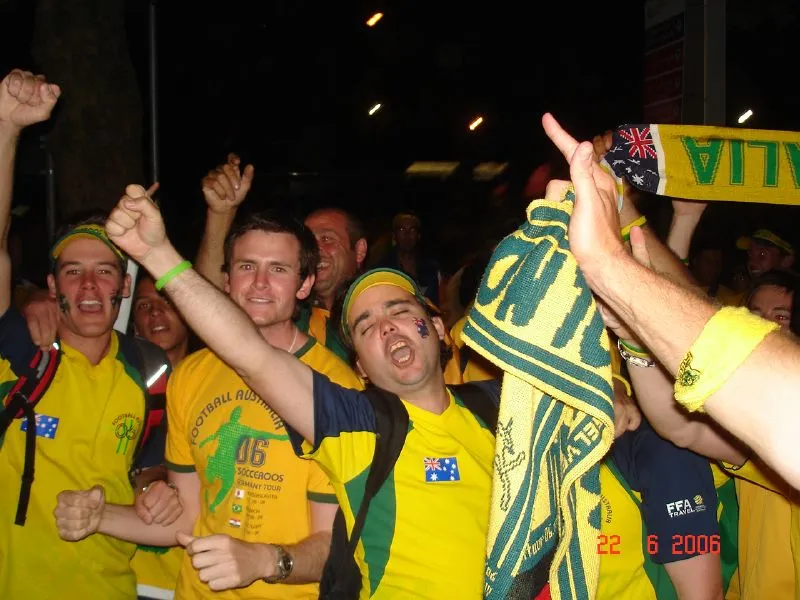
Photo: Iavor Georgeff from Perth, Australia, CC BY 2.0, via Wikimedia Commons
There's a moment at most football grounds that linguists would pay good money to study. It's about twenty minutes in, when the home end — a shifting, arguing, phone-scrolling mass of several thousand people — suddenly locks together. One voice. Thousands strong. Perfect rhythm.
Nobody conducts. Nobody rehearses. There's no app prompting the lyrics. And yet the message lands, word for word, in time, every single week.
We spend a lot of time at 100 Languages thinking about how humans transmit meaning. And honestly? The football terrace might be the most impressive live demonstration of it in the country.
The Chant Is a Language With Grammar
Listen properly and you'll notice chants follow rules, even though nobody ever wrote them down. There's a call-and-response structure — a lone voice starts, the crowd answers. There's a build: quiet, sardonic, then loud. There's even a kind of punctuation, the pause after the punchline where the whole end holds its breath before erupting.
Take the classic format of borrowing a pop melody. Sloop John B, Seven Nation Army, Hey Jude — the tunes arrive pre-loaded with emotion, and the crowd grafts new words on top. It's essentially sampling, done live, by untrained volunteers, in the rain.
The grammar also has regional dialects. Anfield's Kop sings differently from a Championship end in Yorkshire. London grounds have their own cadence, their own borrowed melodies. You can often tell where you are in the country with your eyes shut, just from the phrasing.
Why Unison Works When Nothing Else Does
Here's the genuinely remarkable bit: singing in unison synchronises people. Not metaphorically — physiologically. Research into group singing has shown that breathing together and vocalising together can align heart rates and trigger the release of endorphins and oxytocin. Choirs know this. So, whether they'd put it that way or not, do the regulars in the away end at Rotherham.
In an age where so much of our communication is asynchronous — a text left on read, a comment thrown into the void — the chant is the opposite. It is instant, communal, and impossible to do alone. You cannot chant by yourself. The form itself requires other people.
That's why it's such a powerful bonding tool. Postcode, class, age, whether you normally have anything at all in common with the person next to you — for ninety minutes, none of it matters. You are speaking the same language at the same time, and that shared voice does something no group chat ever will.
Borrowed Words, Borrowed Tunes, Homegrown Meaning
The vocabulary of the terraces is a museum of borrowed culture. Melodies come from pop, hymns, folk songs, other clubs, occasionally other countries — British fans have cheerfully adopted chants that started life in Italian or German stadiums. The words get localised, the names swapped, the jokes sharpened.
And the humour! Terrace wit is a dialect all of its own: dry, merciless, self-deprecating, often funnier than anything on telly. A well-crafted chant about your own goalkeeper's howler is a very British art form — affection expressed through gentle abuse.
Even the silences speak. The minute of applause, the sudden hush — the crowd's language has registers for grief as well as joy. That range, from bawdy comedy to genuine collective mourning, is more emotional vocabulary than most of us manage in a week of conversation.
What the Terraces Know That We've Forgotten
There's a lesson here for anyone interested in how communities hold together. We tend to think of communication as information transfer — did the message arrive, was it understood. But the chant isn't really about information. Everyone already knows the words. The point isn't the message; the point is saying it together.
That's why chants survive relegation, ownership chaos, even decades without a trophy. The language outlives the news it carries.
Maybe that's the quiet genius of terrace culture: it understood, long before the scientists caught up, that the most human thing you can do with your voice is lend it to a crowd. Ninety minutes, one language, spoken by everyone and owned by no one.
Somewhere in Britain next Saturday, several thousand strangers will solve the oldest problem in communication — how to feel like one body instead of many — without giving it a second thought. Then they'll queue for a pie and argue about the penalty.
Which, come to think of it, is its own kind of poetry.