Ta, Cheers, Nice One: The Tiny Words Doing All the Heavy Lifting in British Homes

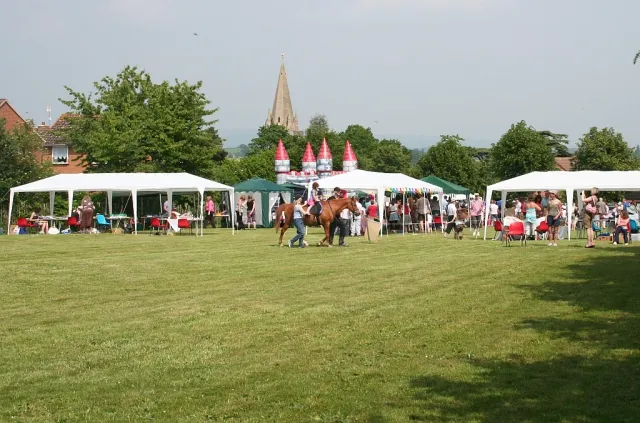
Photo: Evelyn Simak , CC BY-SA 2.0, via Wikimedia Commons
The smallest sentences in the language
Linguists spend careers dissecting grand things — grammar, etymology, the evolution of the English vowel. Meanwhile, in the hallway of a semi in Wigan, a man is saying 'ta-ra' to his neighbour and carrying, in those two syllables, roughly four hundred years of regional history.
Every language has its workhorse phrases, but Britain has perfected something else: the micro-utterance. Not small talk — smaller than small talk. These are the verbal reflexes that fire in doorways, kitchens and garden gates. 'Mind the step.' 'You right?' 'Lovely that.' 'There we are.' Nobody planned them. Nobody can stop saying them.
A field guide, room by room
The kitchen. The most linguistically productive room in the house. 'Cuppa?' is a full sentence, an offer of emotional support, and a scheduling proposal all at once. The response 'go on then' is a complete acceptance of hospitality and, often, an unspoken agreement to discuss something serious. Note also 'whack the kettle on', where 'whack' does the work of a whole verb phrase.
The hallway. Departure territory. Here lives the famous cluster: 'Cheers', 'ta', 'ta-ra', 'cheers drive' (bus territory), 'mind how you go' (taxi rank, West Country), 'safe' (London, younger), 'ta-ta' (grandmothers everywhere, forever). Each one is a fingerprint. Say 'cheers' to a Brummie taxi driver and he'll know roughly where you're from before you've given an address.
The doorstep. 'You right?' — Nottingham's gift to the world — is not a question about your legal standing. It's a greeting, a wellness check and a full conversation, compressed. 'Alright?' performs the same job in most of the North, and the correct answer is always 'alright?', returned like a password.
The garden. Weather talk gets its own micro-dialect here: 'turning out nice', 'bit fresher today', 'could do with a drop'. The last one is a prayer disguised as a complaint.
What three syllables can carry
Here's the thing that makes these phrases fascinating rather than just cute: they're doing class work, region work and warmth work simultaneously, and they do it below the level of conscious thought.
'Ta' vs 'thank you very much' is a whole sociology lecture. 'Lovely' as an all-purpose adjective — lovely weather, lovely jubbly, lovely that — softens everything it touches. And the intonation matters more than the words: 'alright?' said flat is a greeting, said with a rising edge is a genuine question, and said by your mum on the phone means she's noticed something's wrong.
There's warmth coded in there too. 'There we are' at the end of pouring someone a drink means: I've done something small for you and I'm glad. 'There you go', 'in you come', 'sit thee down' — these are hospitality reduced to its purest syllables.
The crowdsourced map
We asked readers to send in the phrases they'd defend to the death, and the results read like a secret atlas:
- 'Ay up' — the East Midlands and Yorkshire multi-tool: greeting, surprise, warning, all in two syllables.
- 'Wasson?' — Black Country for 'what's going on', deployed as a greeting so casual it barely counts as words.
- 'Dydw i ddim' at the door — in Welsh-speaking households, the English 'sorry, who?' doesn't get a look in.
- 'Haway' — the North East's shout of encouragement, summons and disbelief.
- 'Yer awa' — Scots for 'go on with you', affectionate dismissal at its finest.
- 'Proper' — Essex and the South East's all-purpose intensifier: 'proper lovely', 'proper gutted'.
Draw these on a map and you get something no atlas shows: a portrait of who waves at whom.
Why comedians live here
Ask any British comedian where the funny is and they'll point at exactly these phrases. The comedy isn't in exotic words — it's in the gap between what the phrase says and what it means. 'You right?' contains no request for information. 'Lovely weather' is rarely about weather. A joke lands when someone takes the ritual literally, or when two regional rituals collide in one kitchen.
It's the same mechanism that makes 'cheers' so versatile it's practically a grammar of its own: thanks, goodbye, toast, apology-adjacent, and occasionally an instruction to someone holding a camera. One word, five jobs, zero ambiguity in practice.
Listen closer
The philosophy behind this site is that every language tells a story — and most of those stories aren't told in grand speeches. They're told in the reflexes: the 'ta' your nan used, the 'mind how you go' that followed you out of every shop in your hometown, the 'go on then' that means yes, yes, and also I love you.
You don't need to learn a foreign language to hear history. Sometimes you just need to stand in the kitchen a bit longer and actually listen to what people say when they're passing the milk.
Go on then. Kettle's boiled.