One More for the Road: The Disappearing Dictionary of the British Pub
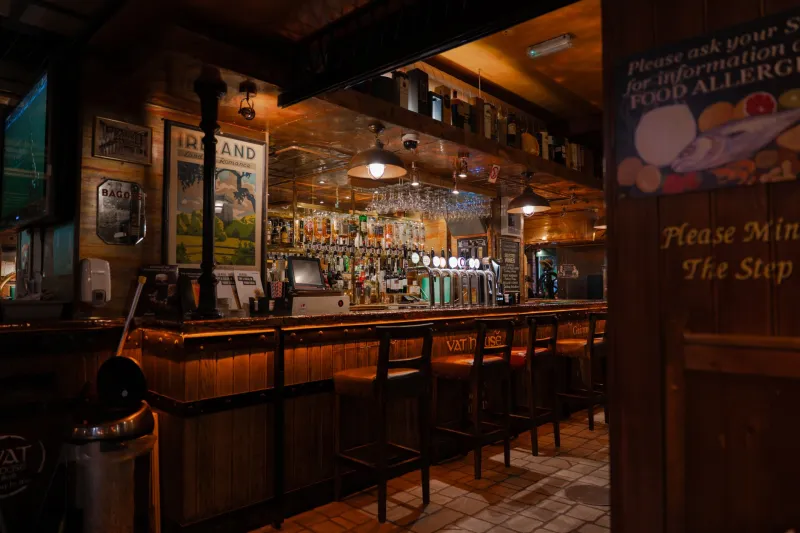
There's a moment, somewhere around the third drink, when a newcomer to a British pub realises they've wandered into a country that doesn't speak English. Everyone else is fluent. They're nodding along to phrases like 'it's your shout' and 'same again?' and watching the barman respond to a raised eyebrow with the correct pint, as if the whole room is operating on a frequency they can't tune into.
That's because, in a very real sense, they can't. The pub has its own language — and like any language, it's dying faster than anyone would like to admit.
My Round: The Grammar of Generosity
Start with the cornerstone: 'my round'. Three syllables carrying an entire moral philosophy. To say it is to enter a binding social contract, one governed by strict, unspoken case law. You buy a round; you will be repaid; the debt is tracked with a precision HMRC would envy.
But watch the locals closely and you'll notice the dialects. In Yorkshire, refusing to let someone buy their round is practically an act of war. In London, the round system has been eroded by contact with outside influences — the 'getting your own in' construction, once unthinkable, now common among the after-work crowd. Linguists call this language contact. Landlords call it a shame.
Then there's the delicate interrogative 'shall we have one more?', which technically means nothing of the sort. Depending on tone, time of day, and the state of the following morning's diary, it can mean yes, no, or a graceful exit ramp being offered to a friend who's struggling. It is possibly the most sophisticated piece of diplomatic language in Britain — and no phrasebook teaches it.
The Words the Bar Built
Some pub vocabulary is genuinely old. A 'groaning board' — the table laden with enough food to make it creak — survives in pockets of the North. 'Wet' as a verb ('we got wet last night') is fading fast, along with the pub signs that announced it. 'Lock-in' itself, that beloved institution of the after-hours pint, is less a word than a whole ceremonial register: the clink of the door, the hush, the sense that you've been promoted.
And the gestures! A raised glass tilted slightly towards the barman. A finger lifted from the pint to signal 'just the one, actually'. The two-finger V laid flat on the bar to count a pair of drinks without breaking a conversation. Visitors from abroad study these signals the way anthropologists study tribal dance — and honestly, they're not far wrong.
Last Orders for the Vernacular?
Here's the uncomfortable bit. The gastropub revolution has done wonderful things for British food and questionable things for British talk. When the menu is laminated and the ordering is done on an app, the ritual phrases wither. 'Same again' requires a person to say it to. 'What are you having?' is a question a screen never asks.
The landlord who knew your order, your name and your week's bad news was a walking repository of the language. The QR code on the table is not. It's efficient, sure. But efficiency is the enemy of dialect — dialects are born from necessity, repetition and, frankly, a bit of inefficiency.
Learning It Before It's Gone
So consider this your crash course, while there's still time. 'It's gone quiet' means it's late. 'I'm not stopping' means you're staying for three. 'Being on it' is both a warning and a compliment. 'A soft one' is a shandy and a statement about your character. And 'one for the road' is less a phrase than a farewell in disguise — the last word in a language built for company.
Every pub still standing is a living archive. Every regular who says 'the usual?' is a native speaker of something older than English itself. Learn a few phrases before last orders — because when this vernacular goes, we won't just lose the words. We'll lose the conversations they were built for.