Pass the Chai: How Migrant Kitchens and Grandmothers Rewrote the Way Britain Talks
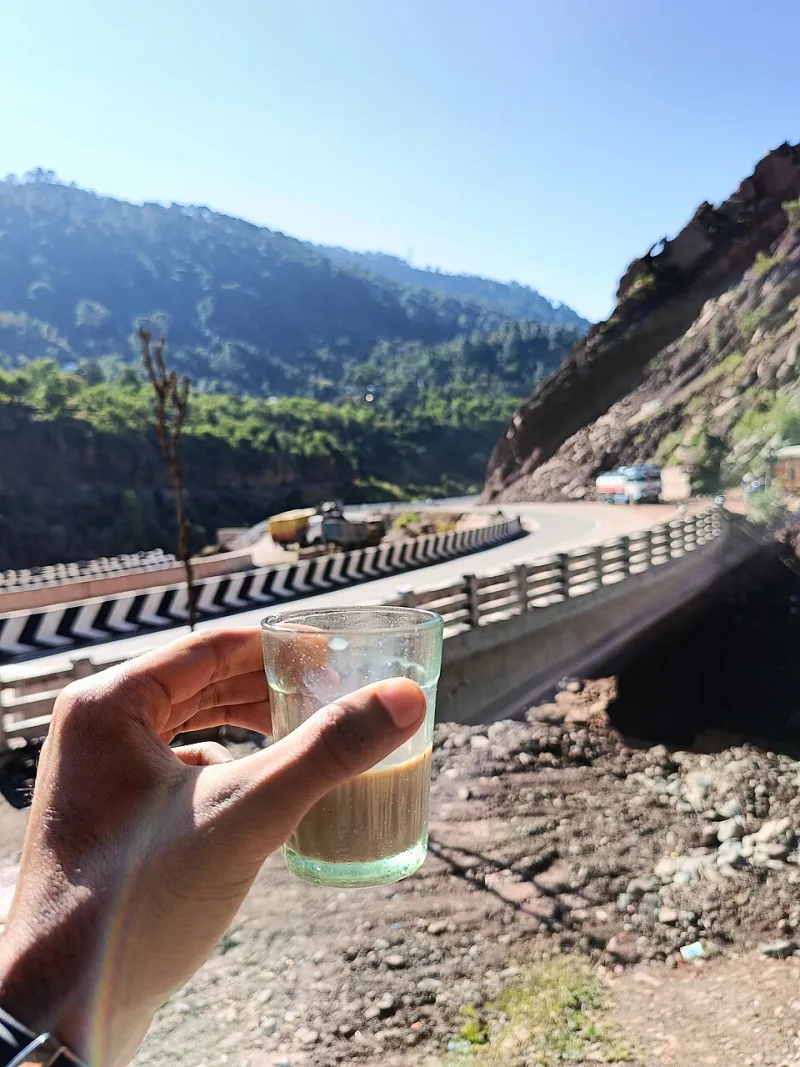
Photo: Tajeshwarr Singh, CC BY-SA 4.0, via Wikimedia Commons
Languages don't apply for visas. They turn up in a suitcase, get passed around a dinner table, and one day a teenager in Solihull is saying 'schmooze' without a second thought.
That's how English has always worked — it's less a language than a very long queue of borrowed words. But some of the best recent arrivals came with the Windrush generation, with post-war Polish pilots, with Ugandan Asian families in the 70s, with every community that set up a shop, a café or a Sunday dinner that neighbours couldn't resist.
Here are ten of our favourites, traced from wherever they started to wherever they've landed.
1. Chai
Technically, 'chai' is just the Hindi, Urdu and Persian word for tea — so when Brits say 'chai tea', they're saying 'tea tea'. The spiced version travelled from Indian kitchens via coffee-shop menus and is now a high-street staple. Funny thing about a word: it crossed the world twice, once as a leaf and once as a sound.
2. Balti
Named after the bucket-like dish it's cooked in — balti means bucket — this one is oddly a British invention. The dish was born in Birmingham's Balti Triangle in the late 70s, created by Kashmiri chefs for a local palate. Britain didn't just borrow this word; it minted it.
3. Schmooze
From Yiddish schmues (a chat), via Jewish communities in London's East End and New York's media world, and back across the Atlantic. It arrived in British offices sometime in the 90s and never left. There's a rule in linguistics: if English needs a word for something, it will shoplift one.
4. Ogórki
The Polish for pickled cucumbers, and for many second-generation Poles, the word that refuses to translate. 'My dad calls them ogórki, always,' one Manchester-born speaker told us. 'If I said pickles, it would mean something else — something less.' Polish shops across the UK keep the jars, and the word, in steady supply.
5. Pukka
Hindi and Urdu for 'cooked, ripe, solid, genuine'. Kipling used it, British soldiers in India adopted it, and it's now thoroughly assimilated — most famously in a certain herbal tea brand. A word that means 'real' has had a very real journey.
6. Nosh
Possibly Yiddish nashn (to nibble), possibly older slang — etymologists argue, which is very etymologist of them. Either way, Jewish delis and cafés did the heavy lifting in making it universal British slang for food.
7. Jugaad
The Hindi term for ingenious, improvisatory problem-solving — the art of fixing something with whatever's to hand. It hasn't gone fully mainstream, but it's spreading through engineering circles and startup speak. Watch this space; English has a hole where this word belongs.
8. Namaste
Once an exotic greeting from yoga class, now a default polite hello in many British workplaces and playgrounds. A word of respect that made the commute from Sanskrit to Slough.
9. Kebab
From Turkish döner kebap ('rotating roast'), via Berlin's Turkish community and then straight into British nightlife vocabulary. The word arrived with the food in the 60s and 70s and has been propping up the nation's Friday nights ever since.
10. Wallah
From Hindi and Urdu, meaning 'person associated with a task' — as in chaiwallah. Brits now use it as a suffix for anyone who does a thing: 'he's the tech wallah round here'. Colonial-era borrowings rarely die; they just get redeployed.
The Words That Stay in the Family
What strikes you, talking to second- and third-generation Brits, is how many words never made the crossing into wider English — and how much they treasure that. The Gujarati word for the exact way a grandmother scolds. The Somali term for a specific kind of family obligation. The Cantonese phrase that only means what it means at a wedding.
These words are untranslatable not because English lacks vocabulary, but because they carry a whole room inside them — a kitchen, a decade, a person.
At 100 Languages, that's the story we keep coming back to: every word that survives in a family is a small act of keeping a language alive, whether or not anyone outside the front door ever hears it. And every word that does escape — every schmooze, every chai — is a community quietly changing how a whole country talks.
Next time you order a balti and a chai, take a second to notice: you're speaking someone's mother tongue. Two of them, actually.