Every Word Counts Twice: A Day in the Booth With Britain's Courtroom Interpreters
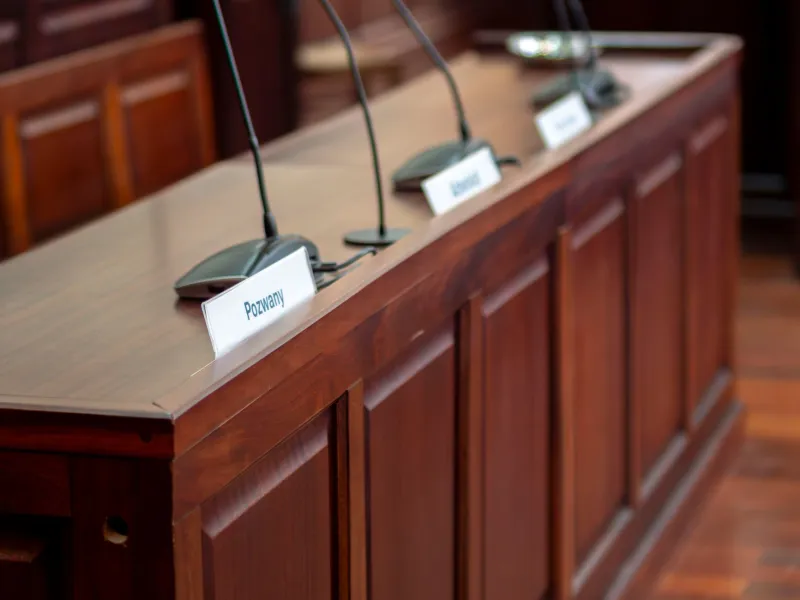
There's a moment, somewhere in almost every interpreting shift, when the job stops being about words at all.
For one interpreter we'll call Amara — a court interpreter with fifteen years of experience across London and the Midlands — it came during a manslaughter trial. A witness, giving evidence in Pashto, broke down mid-sentence. The barrister waited. The judge waited. And Amara had to decide, in less than a second, how to carry a sob across two languages without changing what the sob meant.
"You render the pause," she says. "You render the crying. Because in court, the crying is evidence. If I tidy it up, I've edited the truth."
The First Rule: Say It All, Say It Exactly
Most people assume interpretation is a bit like translation with a stopwatch — a paraphrase on the fly. Interpreters will tell you the opposite. The professional standard, drilled into every accredited interpreter in the UK, is complete and accurate rendition: no summarising, no softening, no explaining.
If a defendant says "I never touched him," the interpreter must not say "he denies the assault." If a witness swears, the interpreter swears. If a witness swears in a dialect that carries a particular flavour of contempt, the interpreter must find that flavour in English — even when English doesn't quite have it.
"There's no such thing as 'close enough' in a courtroom," says Amara. "'Close enough' is how appeals start."
The technical term for the hardest mode is simultaneous — interpreting in real time, usually whispered or into a headset, while a barrister talks at ninety miles an hour about hearsay, mitigation and the ascertainable intentions of a reasonable person. Legal English is a dialect unto itself, a centuries-old knot of French, Latin and parliamentary habit. The interpreter's job is to unpick that knot into plain meaning in another language, instantly, without losing the legal sharpness of the original.
There is no word-for-word equivalent of "reasonable doubt" in many of the world's languages. Neither is there for "mitigation," "bail conditions" or "cautioned." The interpreter has to build a bridge out of whatever materials the two languages share — and the court, more often than not, never notices the engineering.
When Meaning Gets Bent
The trouble is that we do notice — when it goes wrong.
Campaigners and interpreter associations have long warned that miscarriages of justice can begin with a mistranslated phrase. A word rendered slightly too strongly can turn a quarrel into a threat. A softened verb can turn a confession into an alibi. In one widely cited type of case, the distinction between "I hit him" and "I was hitting at him" — a distinction some languages make with a single grammatical twist — has meant the difference between charges sticking and charges collapsing.
Hospitals tell a parallel story. A midwife asking about pain needs to know whether "hurt" means ache, stabbing, or something the patient has simply learned to live with. An elderly patient describing symptoms in a language with no tidy word for "dizzy" may be conveying something a clinician never hears. In maternity and mental health settings especially, the gap between a family member interpreting informally and a qualified professional can be the gap between treatment and tragedy.
"People think interpreting is about being clever in two languages," says another interpreter, who works across the NHS in Yorkshire. "It's not. It's about being invisible. The moment anyone remembers you were in the room, you've got in the way."
The Quiet Shortage
Here is the part that should worry everyone: Britain is running out of these people.
Interpreters' associations have warned for years that the profession is thinning out. Rates of pay — particularly since the outsourcing of court interpreting to commercial agencies — have fallen in real terms while workloads have grown. Experienced interpreters are leaving for better-paid adjacent work; fewer are coming in behind them. Courts adjourn because no interpreter can be found. Appointments are rearranged. Trials, already creaking under backlogs, wait a little longer.
The arithmetic is unforgiving. The UK speaks more than 300 languages, and demand doesn't arrive in tidy proportion. Rare languages of asylum and resettlement — languages spoken by relatively few people, some with no written tradition and no standardised legal vocabulary — are precisely the ones needed most urgently in courtrooms and A&E departments.
"For some languages, you can count the qualified interpreters in the country on one hand," Amara says. "And the state needs them on a Tuesday."
A Language Job Like No Other
At 100 Languages we spend a lot of time celebrating what languages do: how they carry culture, humour, family, home. Court interpreting is the inverse celebration — a reminder of what happens when a language becomes load-bearing. When a single verb choice holds up a verdict, a diagnosis, a person's future.
It is also, quietly, one of the most demanding linguistic jobs in Britain. The interpreter must be fluent in the grammar of grief and the grammar of statute simultaneously. They must hear a lie and render the lie. They must hear a confession and render it without a flicker of judgement crossing their voice — because a flicker, in the wrong direction, is also an edit.
And they do it in rooms where almost nobody looks at them. The barrister addresses the witness. The judge addresses the defendant. The interpreter is the channel, and a good one disappears into it.
"The best compliment I ever got," Amara says, laughing, "was a defendant who told his solicitor afterwards that he was amazed how well his English had held up in court. He'd spoken four words of it in his life. That's the job. You vanish."
Vanishing, though, has a cost — and a profession that vanishes slowly, through underpayment and overwork, takes the justice system's integrity with it. Every adjourned trial, every misunderstood symptom, every "close enough" rendering is a small bend in something that is supposed to be straight.
Every word, in those rooms, counts twice: once for the person who said it, and once for the person who has to hear it. Britain's interpreters are the only people making sure the count comes out even. It might be time we started noticing them before the words start to wobble.