Same House, Different Tongues: The Generational Vowel Split Happening at Every British Dinner Table
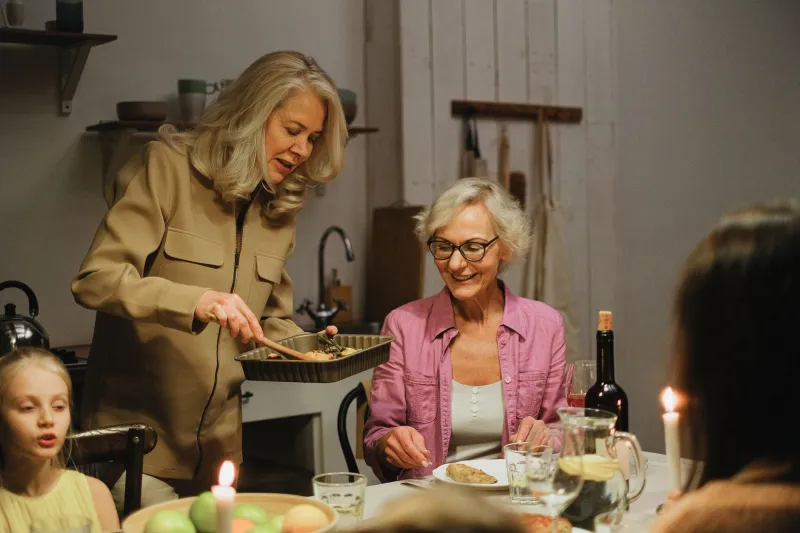
The Kitchen Where Two Accents Live
Sit at a Sunday roast in almost any British household and listen properly. Not to the arguments about gravy or the football — to the sounds. There's a decent chance you'll hear three generations producing three subtly different versions of English, all under one roof, all convinced they're speaking normally.
Gran still says 'nan' and pronounces 'bath' with a short, clipped vowel. Mum splits the difference, her accent softened by a university town and twenty years of open-plan offices. And the teenager at the end of the table? She's rising at the end of every sentence, saying 'bare' when she means 'a lot of', and pronouncing certain vowels in a way sociolinguists are genuinely excited about.
This isn't your imagination. British speech is changing faster between generations than it has for decades — and the gap is now measurable, not just noticeable.
What the Linguists Are Hearing
Sociolinguists have tracked vowel shifts in British English for years, and the recent data tells a striking story. Standard Reference English — the RP-adjacent accent once broadcast by the BBC as a matter of policy — is losing ground among younger speakers. Meanwhile, features once confined to London and the South East are spreading: th-fronting ('fink' for 'think'), the vocalised 'l' ('miwk' for 'milk'), and that famous glottal stop in the middle of 'butter'.
Then there's the intonation. Researchers have documented the spread of 'uptalk' — the rising inflection on statements — and, more recently, the phenomenon some have dubbed 'the millennial pause', that beat of silence before speaking on a recording. Gen Z, apparently, has already moved past it. Each cohort is developing its own fingerprint, and the fingerprint is audible.
The result is something sociologists of language have started calling the generational accent split: not a clean divide, but a drift. Speech habits set roughly in your teens tend to stick, which means every generation carries the accent of its own decade like a badge — a linguistic birth certificate nobody asked for.
Accent Tribes or a Quiet Merger?
The pessimistic read is fragmentation: Britain splitting into accent tribes, each generation unable to fully hear the others. The optimistic read — and honestly, the better supported one — is convergence of a different kind.
Yes, boomers and Gen Z sound different. But young speakers in Glasgow, Cardiff, Manchester and London are sounding more like each other than their grandparents ever did. Media, migration and multicultural English have created shared features crossing old regional lines. The tribal divide isn't north versus south anymore; it's old versus young, and it runs through every family.
Which reframes the dinner table entirely. Gran's 'nan' isn't old-fashioned stubbornness — it's an archive. The teenager's inflection isn't sloppiness — it's an experiment. Every generation is a dialect in motion, and the family kitchen is where the handover happens.
Ten Words That Instantly Date a Speaker
Want to play the game at your next family gathering? Say these and see who winces:
- Wireless — for anyone under forty, a device with no wire, which is worse.
- Cool — still going, but the way you say it matters. Enthusiastic 'cool!' dates you to the nineties; flat, ironic 'cool' is younger.
- Bare — meaning 'very' or 'a lot of'. Instantly marks you as under thirty (or trying too hard).
- Lush — brilliant in Wales and the South West, baffling in Leeds.
- Groovy — nobody says it sincerely anymore, which is exactly why it dates you.
- Peng — attractive or excellent. If you know it, you're probably not a boomer.
- Marvellous — the sound of a specific generation of BBC continuity announcers.
- Wicked — nineties youth culture, now firmly in parent territory, which is how it dies.
- Telly — still beloved, but its decline tracks the decline of the object itself.
- Skint — the great unifier. Every generation, every region, permanently broke.
Every Accent Is a Language Telling Its Story
Here at 100 Languages, we think of accents as languages in miniature — each one a compressed history of who you knew, where you moved and what you listened to at seventeen. The generational split isn't a problem to be corrected or a decline to be mourned. It's proof that English in Britain is alive, arguing with itself, and refusing to sit still.
So next time Gran says 'nan' and your niece says something you have to ask twice about, don't correct anyone. Record it. You're listening to two different eras of the same language, having a chat over the roast.