Sixty Seconds of Nothing: The Teachers Teaching Britain to Stop Talking
There's a moment in a Japanese tea ceremony called ma — the deliberate pause between movements, the emptiness that is not absence but part of the composition. In Britain, we have a version of this too. It's the four-second gap after someone says 'isn't it awful about the buses', and it is filled, without fail, by one of three words: sorry, lovely, or a noise best transcribed as 'mmnyeh'.
We are, as a nation, terrified of the pause. But a small band of teachers across the UK reckons that's exactly where the learning is.
The Minute of Nothing
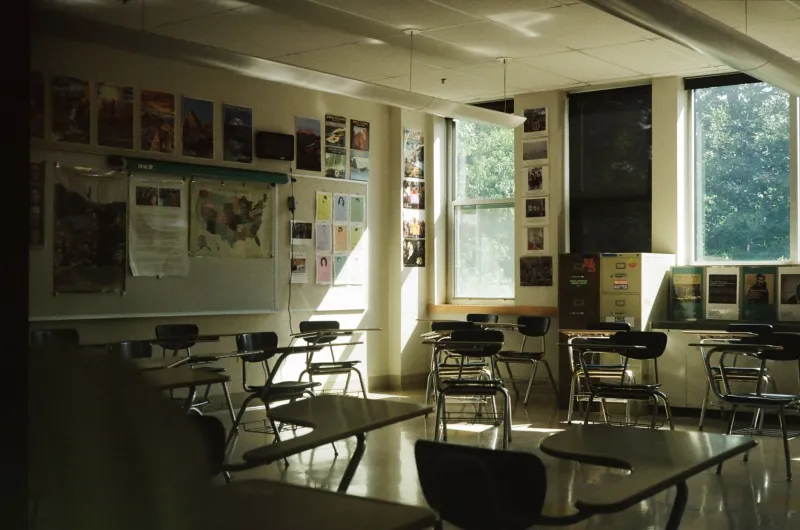
Every Tuesday, Priya Nandra's Year 8 French class in Leicester begins with something she calls 'the quiet minute'. Nobody speaks. Nobody writes. For sixty seconds, the room just... exists.
'It started as a classroom management trick, honestly,' she admits. 'Then I noticed something. After the minute, when they spoke French, their pauses were different. They weren't rushing to fill space. They were choosing words.'
Nandra isn't alone. From a Welsh-medium primary in Carmarthenshire to an ESOL class in Glasgow, teachers are experimenting with structured silence — and finding that students who are comfortable in the gap become braver with language, not more hesitant.
What Other Languages Already Know
Part of the problem is that English treats silence as a fault in the system. In Japanese, ma (間) is a positive, generative space — the pause that gives meaning to what surrounds it. In many Nordic cultures, a long silence between friends signals comfort, not crisis. Finnish conversation partners can happily let ten seconds breathe while they think.
British conversation, by contrast, runs on what linguists politely call 'minimal response tokens' and what the rest of us call going 'mm', 'yeah', 'right' at roughly 400-millimetre intervals. Research into conversational patterns has repeatedly suggested that English speakers start feeling genuine discomfort at a silence of around four seconds — quicker than almost any other language community studied.
Welsh offers a gentler counterpoint. Hiraeth — that untranslatable ache for a home that may never have existed — lives precisely in what isn't said. It's a word for the feeling that arrives in the pause after a story ends.
Silence as a Language Activity
So what does teaching silence actually look like? In practice, it's pleasingly unglamorous:
- The thinking pause. After asking a question in the target language, the teacher waits a full ten seconds. Agony at first. Game-changing by half term.
- Silent conversation. Students respond to a prompt using only facial expression and gesture, then discuss what they 'heard'. It's BSL-aware, body-language-rich and surprisingly emotional.
- The listening gap. Students listen to a recording in an unfamiliar language and describe what the pauses communicated — hesitation, formality, affection.
That last one, Nandra says, produces the best discussions of her year. 'A student said the pauses in the recording sounded like the speaker was carrying something heavy. That's a reading of language you can't get from a textbook.'
Why We Say 'Lovely' Instead of Nothing
Of course, the British habit isn't going anywhere fast. The 'sorry-lovely gap-filler' is practically a national reflex — a social lubricant that says I acknowledge the silence exists and I am dealing with it on our behalf.
But there's a cost. Students learning a language where silence is respectful — Japanese, Finnish, many Indigenous languages — can accidentally come across as pushy, chattering through pauses their interlocutors considered meaningful. Conversely, learners whose first languages embrace silence can seem aloof in an English classroom that demands constant verbal response.
Teaching the pause, then, isn't a gimmick. It's a genuinely cross-cultural skill: knowing when a gap is rude, when it's restful, and when it's where the real message lives.
The Quietest Lesson of All
At the end of Nandra's Tuesday minute, she asks the class one question: 'What did you notice?' Last week's answers included 'the radiator', 'my own heartbeat' and, from a boy in the front row, 'that I wasn't nervous'.
For a subject built entirely on words, that might be the most fluent thing anyone's said all term. Perhaps every language, English included, has been trying to tell us the same thing all along: listen to the gaps. They're speaking too.